Havana Level: The Architecture
If the street is the living room and the neighborhood is the family, the architecture of Havana is the vessel that holds it all together. It is a city of “good bones”—a grand, decaying stage set that has weathered revolutions, hurricanes, and decades of salt air.
Stripped of the noise and the movement of the crowd, the city reveals itself as a study in contrast: between the soaring verticality of its churches and the crumbling masonry of its alleys; between the cool silence of the sanctuary and the oppressive heat of the pavement.
Chapter 1: The Bones
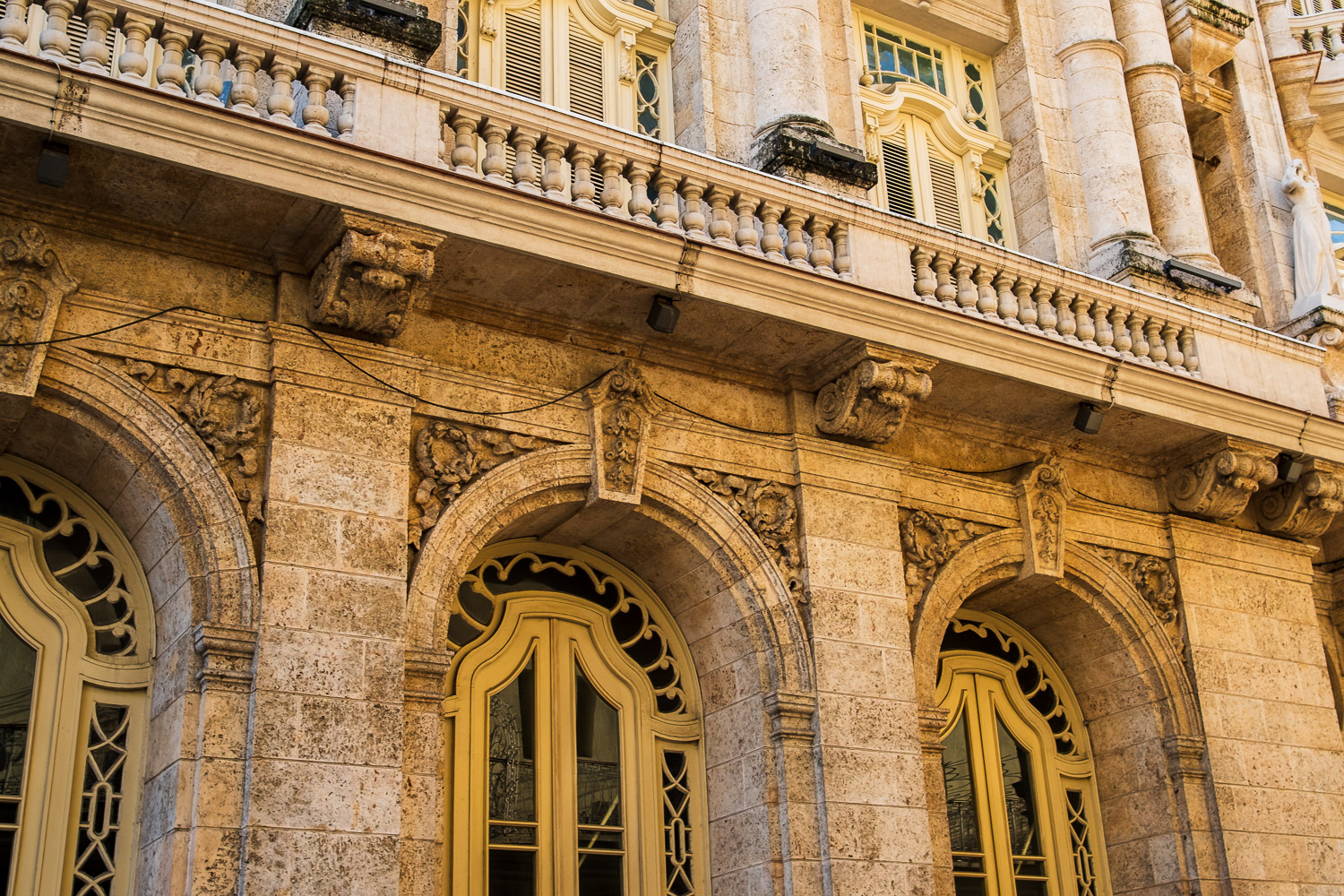
Stone Lace The colonial facades in Old Havana are not merely walls; they are sculptures. Intricate stonework survives the elements, a testament to the craftsmanship of a wealthier, distant past.
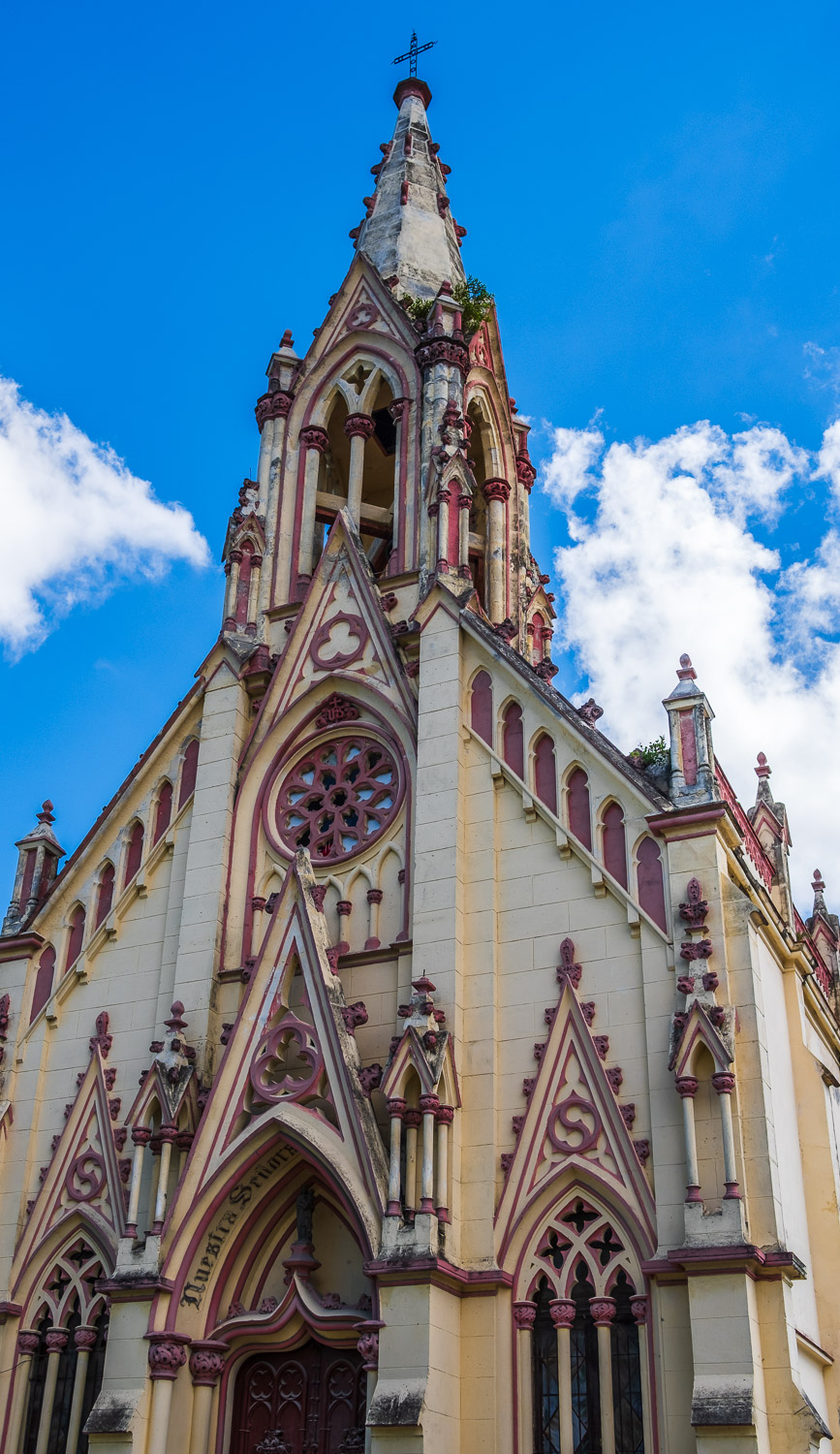
Gothic Tropics A church spire pierces the deep blue Caribbean sky. In a city of low-slung rooftops, these towers act as compass points.
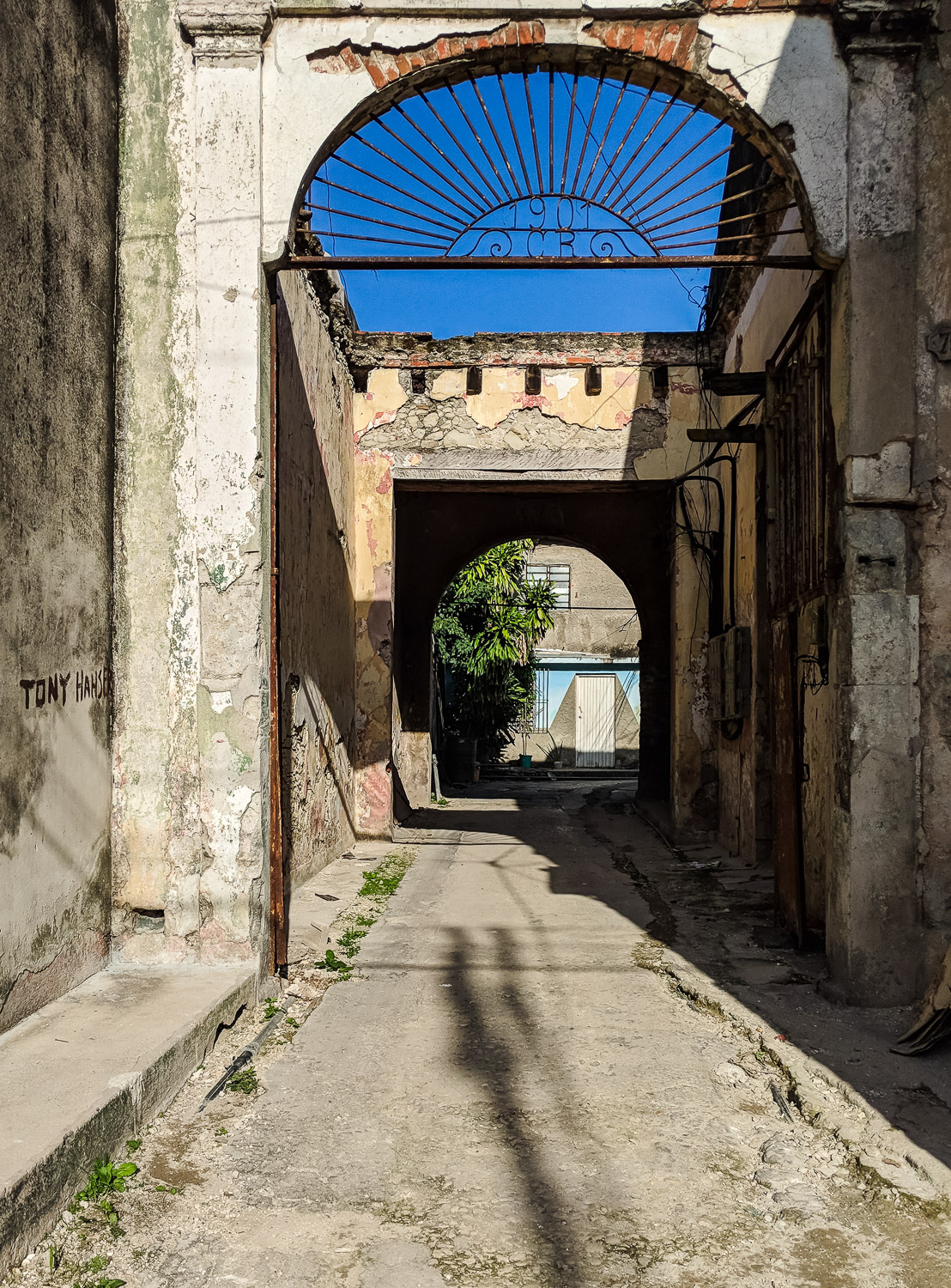
The Archway Structure as a frame. A crumbling masonry arch turns a simple alleyway into a dramatic entrance, blurring the line between ruins and residence.
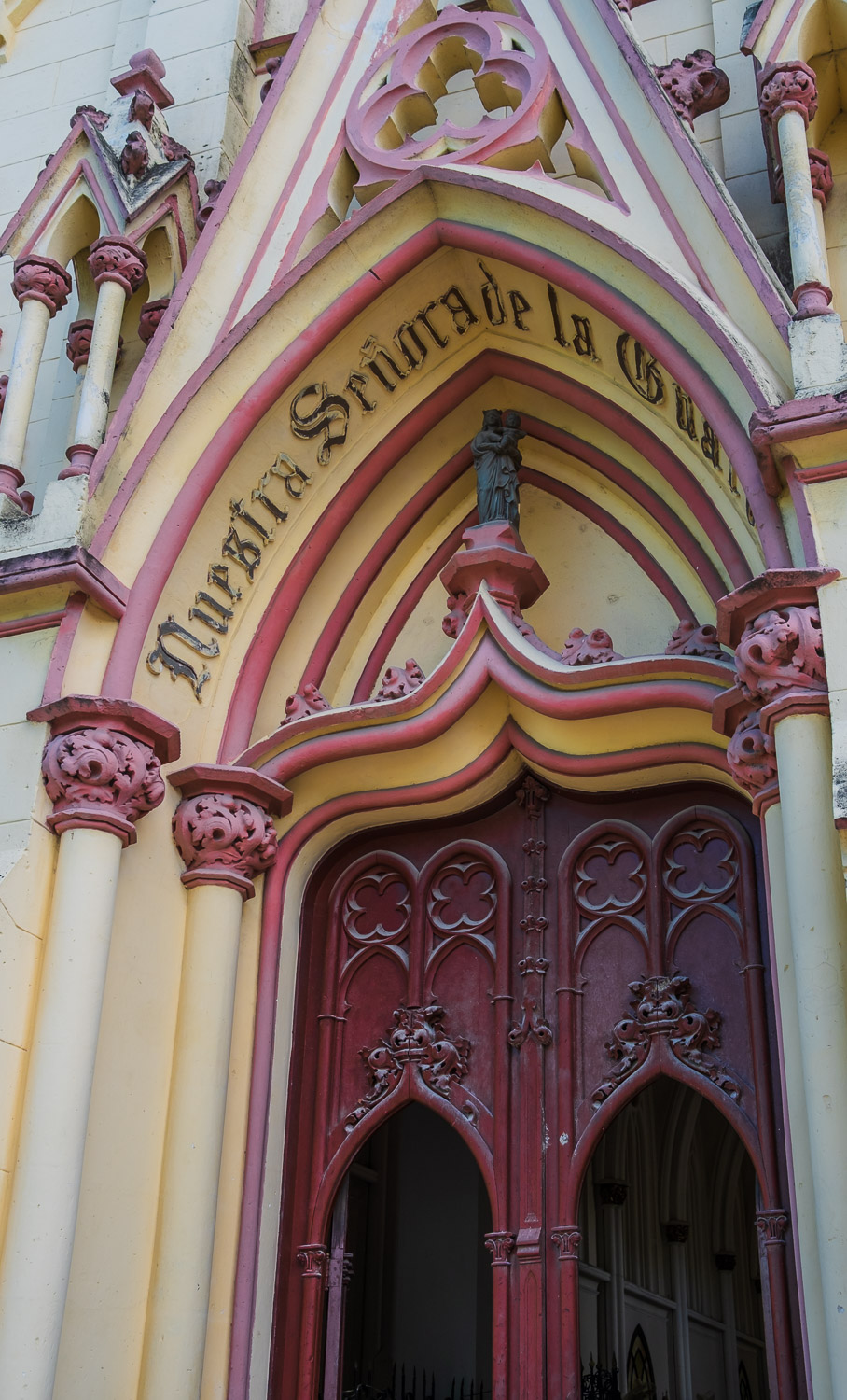
Nuestra Señora The details remain. Despite the fading paint, the inscription over the doorway stands sharp, welcoming the faithful into the cool interior.
Chapter 2: Sanctuary
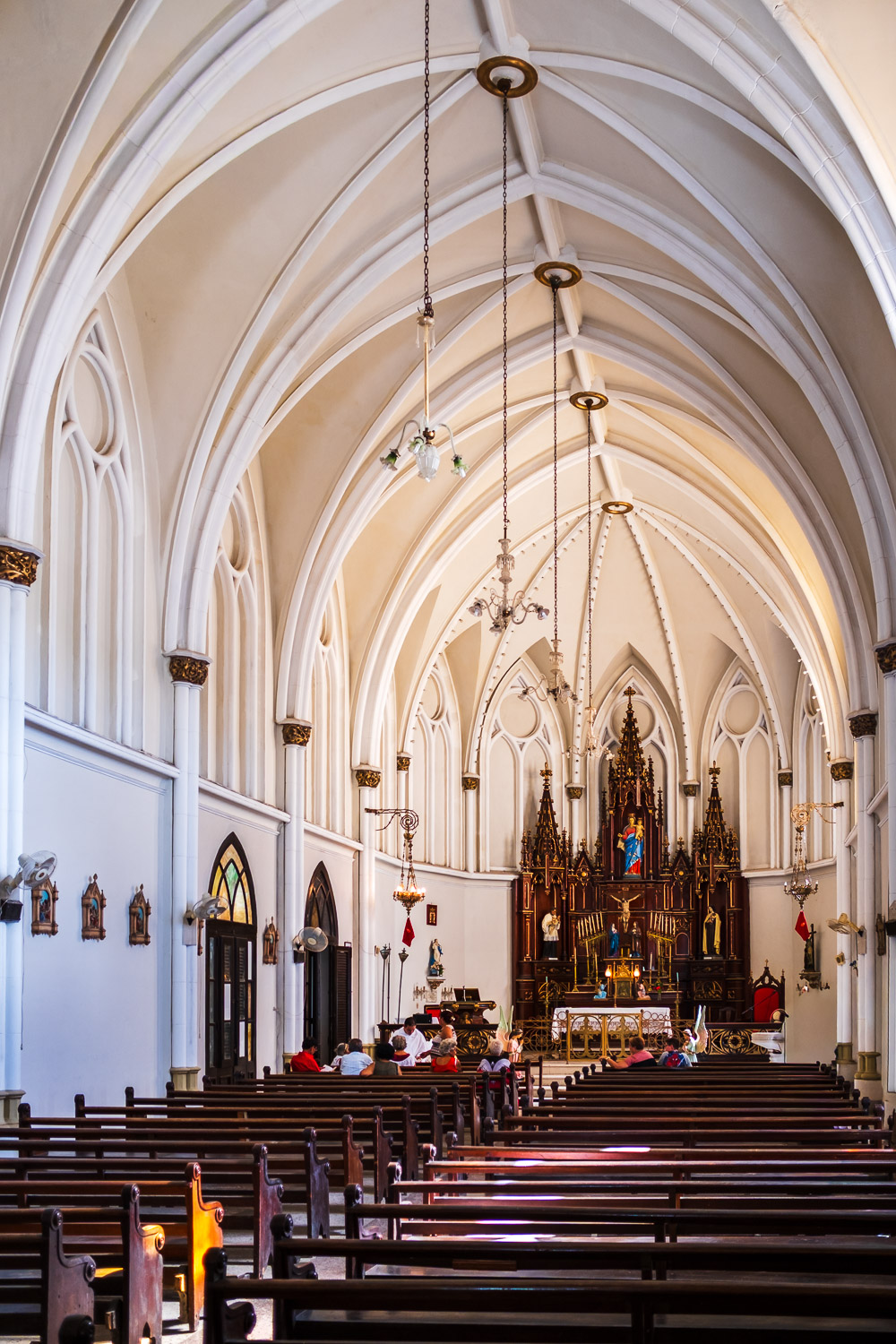
The Nave To step inside is to escape. The high vaulted ceilings trap a layer of silence, offering a respite from the diesel and the din of the street outside.
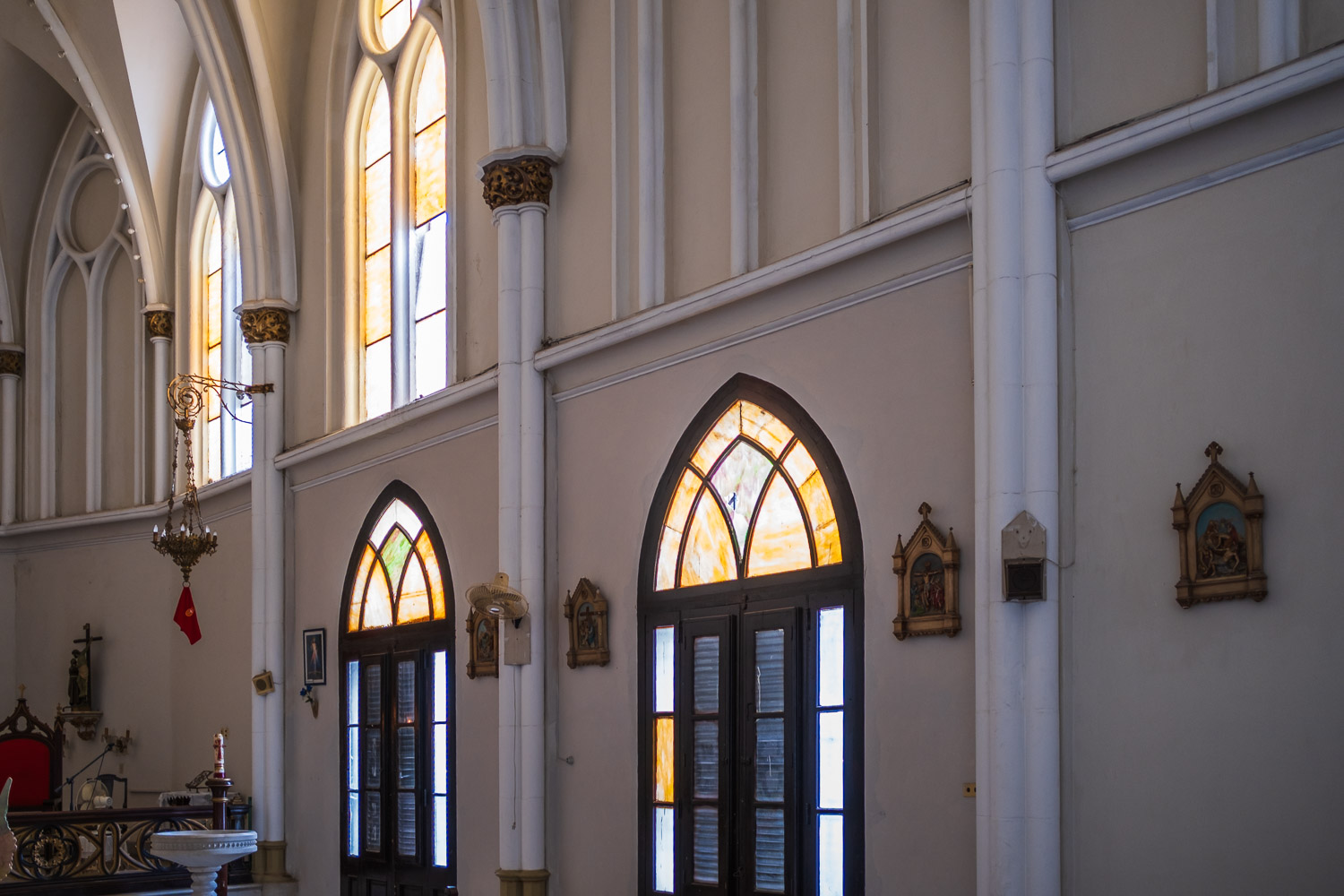
Painted Light The tropical sun is filtered through stained glass, painting the white interior walls with soft, shifting pools of amber and violet.
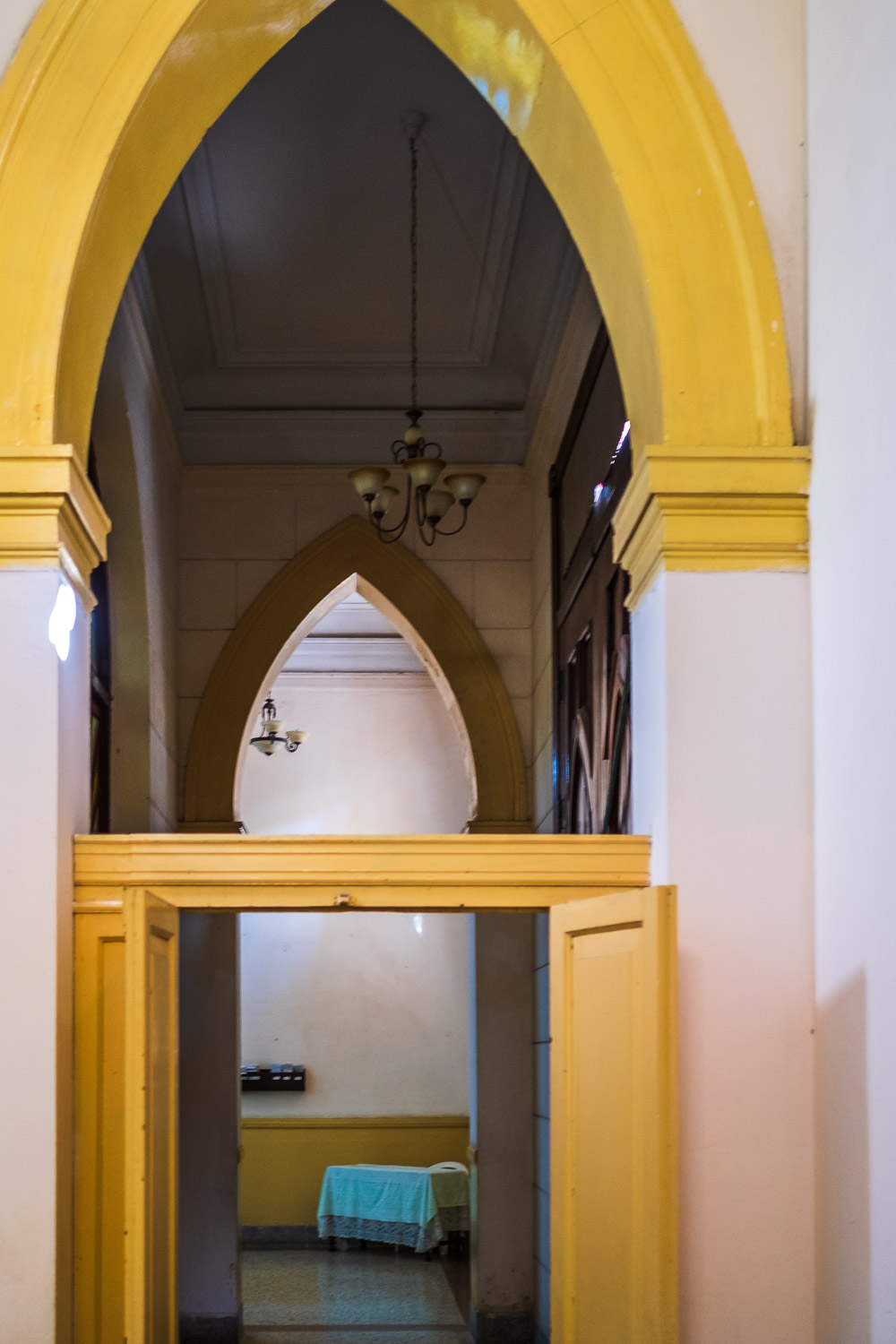
Yellow Hall Architecture guides the eye. A series of arches draws the gaze deeper into the building, emphasizing depth and perspective over decoration.
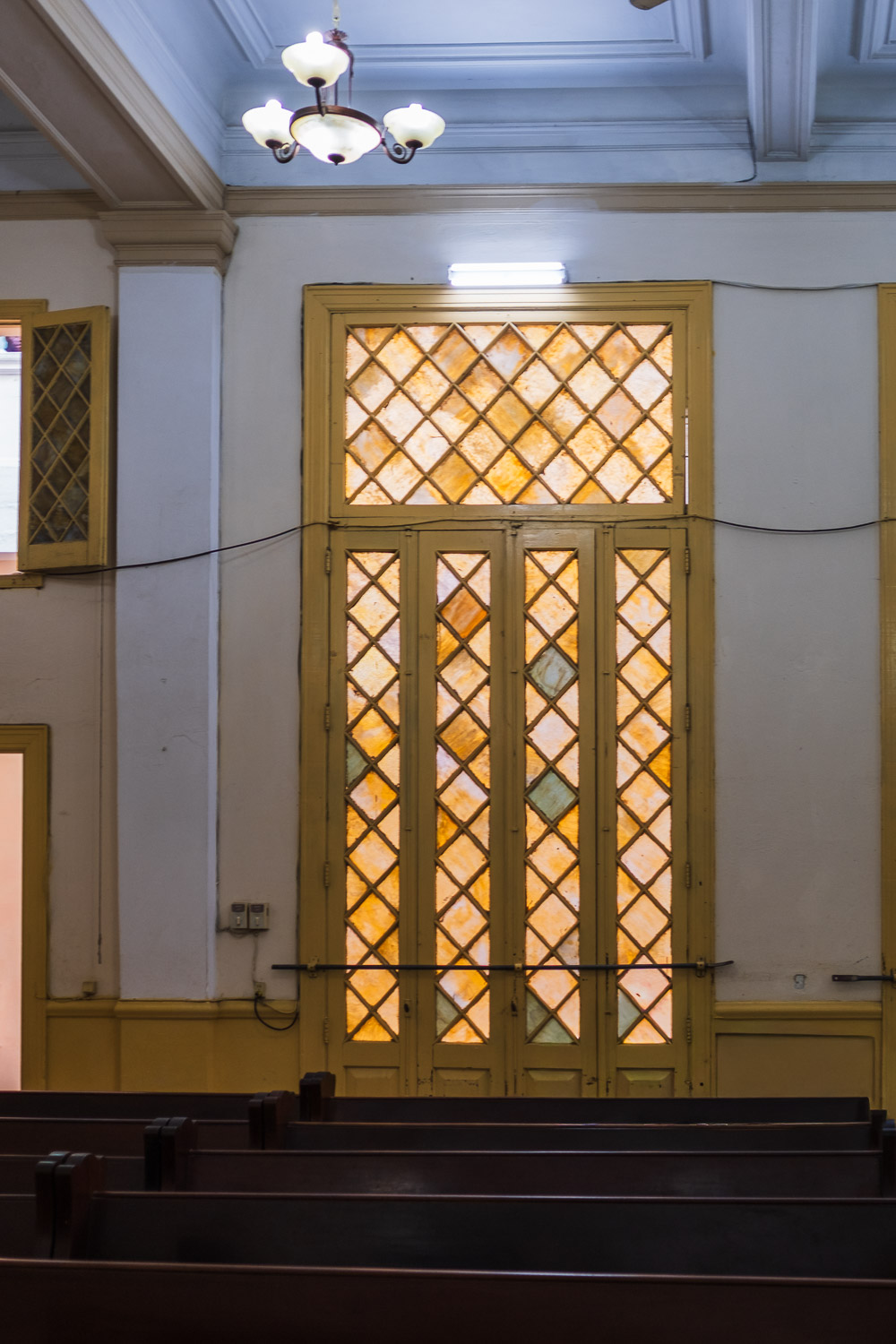
Grid of Gold A moment of stillness. The geometric patterns of the windows contrast with the organic chaos of the city life just beyond the glass.
Chapter 3: The Patina
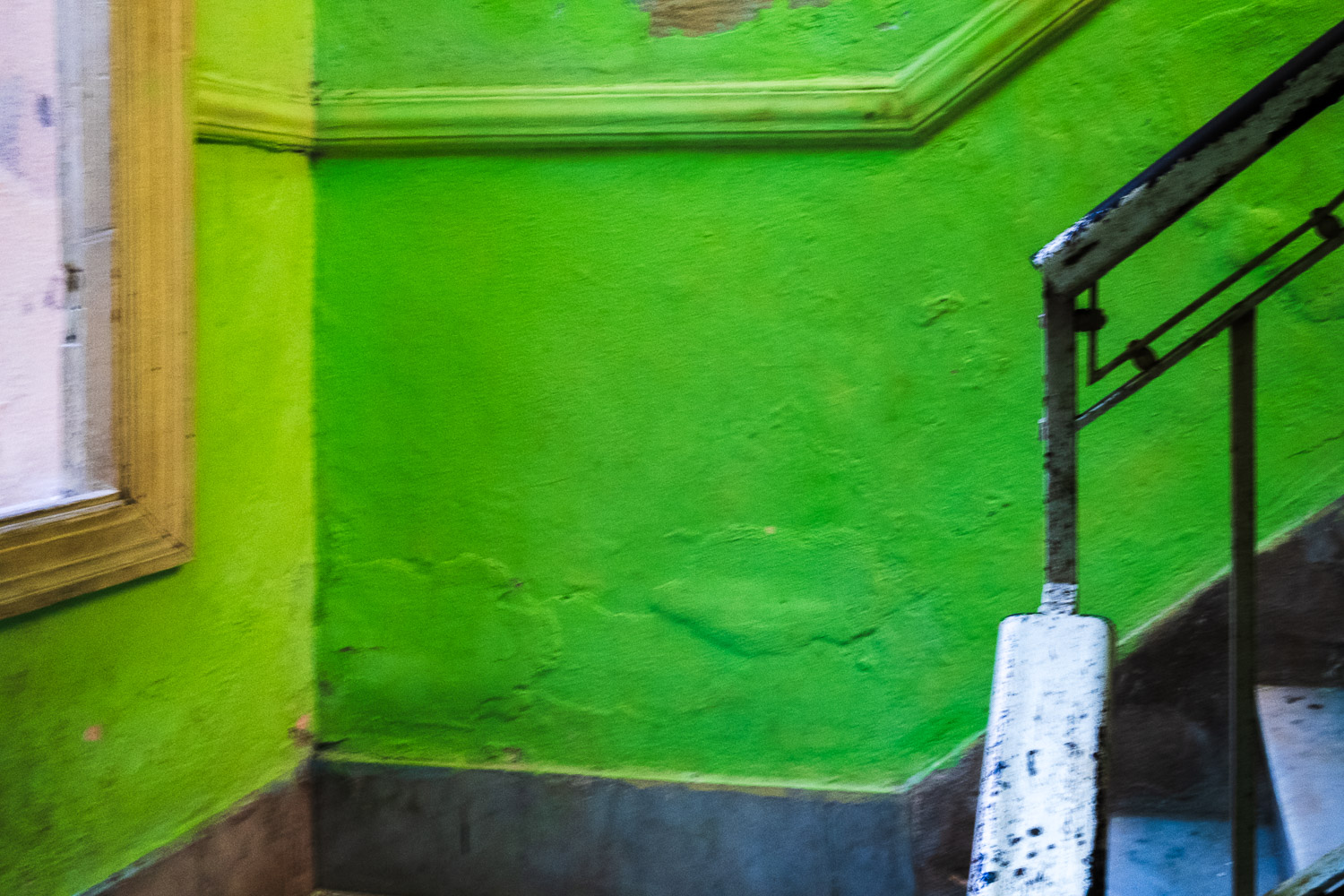
Living Color In Havana, decay is a texture. Layers of green paint peel away from the plaster, creating a surface that feels organic, as if the building is shedding its skin.
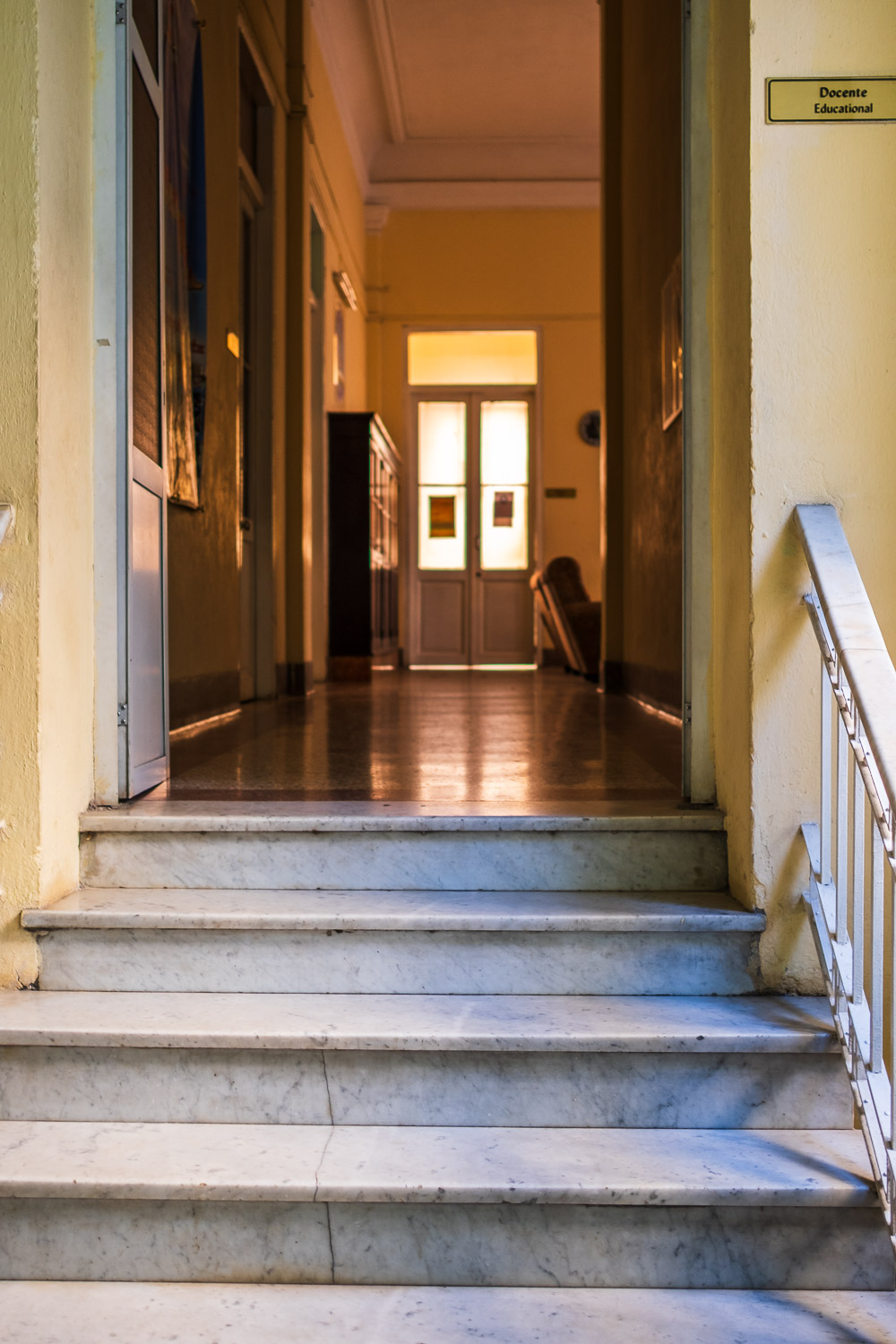
Marble Footing The finish may fade, but the foundation holds. Steep marble staircases remain cool to the touch, worn smooth by generations of footsteps.
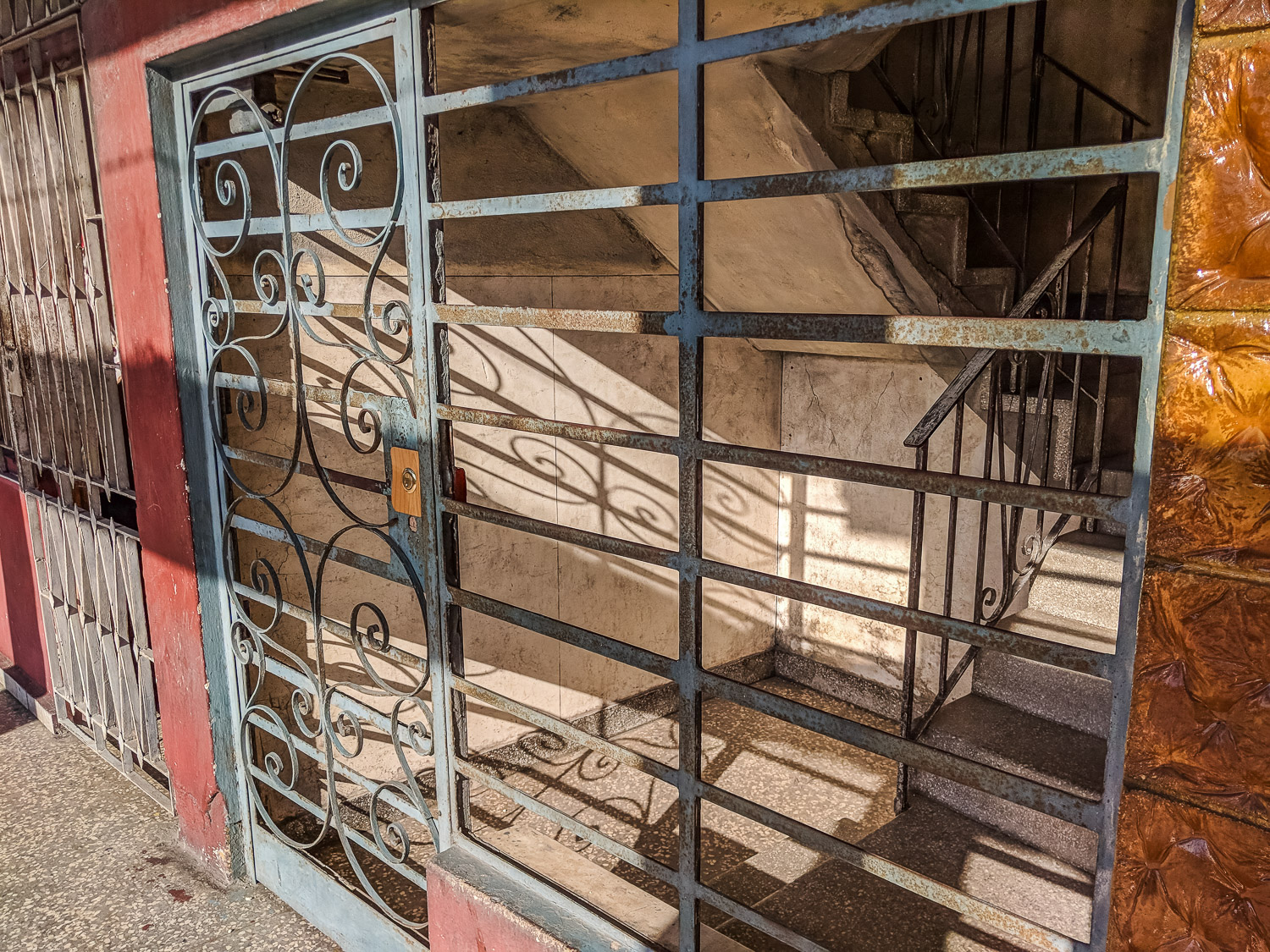
Shadow Play The late afternoon sun turns iron gates into graphic designers, casting long, geometric shadows across the tiled walls.
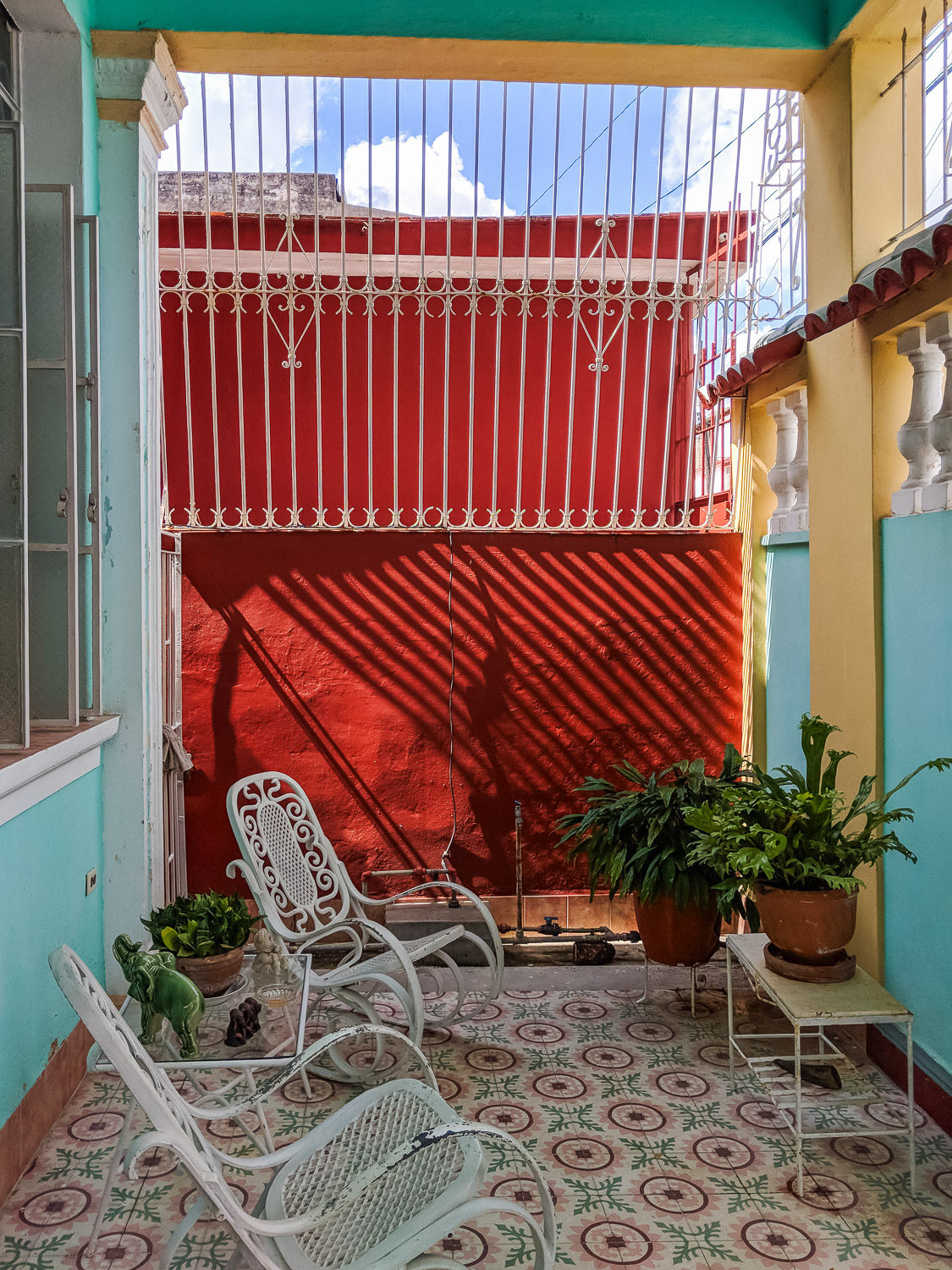
The Porch The threshold between public and private. A turquoise porch offers a shaded vantage point—close enough to watch the street, far enough to feel at home.
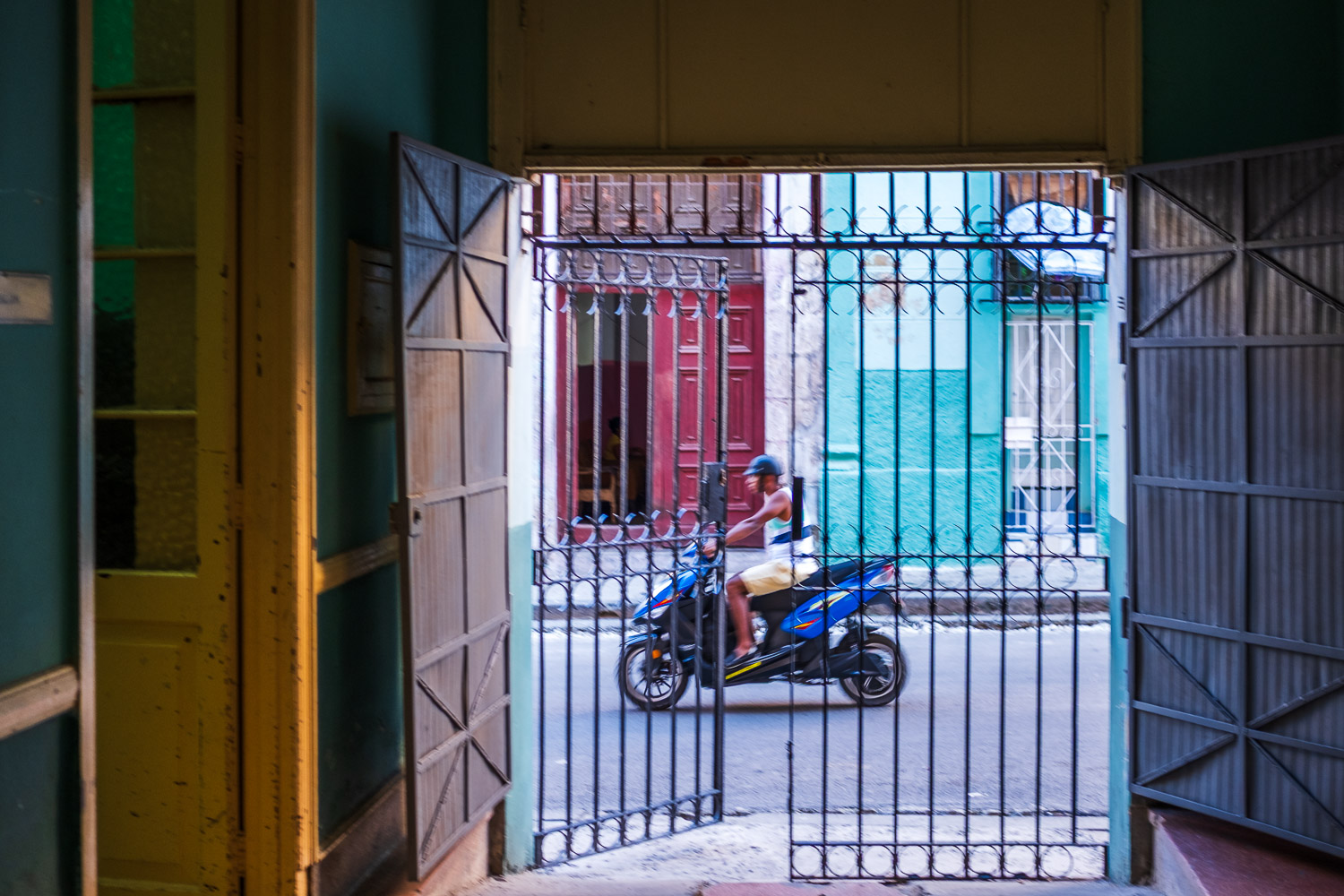
The View Out Finally, we look back. Through the safety of the iron gate, the city speeds by—a blue blur of life framed by the silent, steady architecture that surrounds it.
This concludes the Havana Level trilogy. We started on the Street, moved through the Neighborhoods, and ended here, with the Architecture that makes it all possible. The city is not just a place on a map; it is a living, breathing ecosystem where the people and the stones rely on each other to survive.